 Gather Marketing
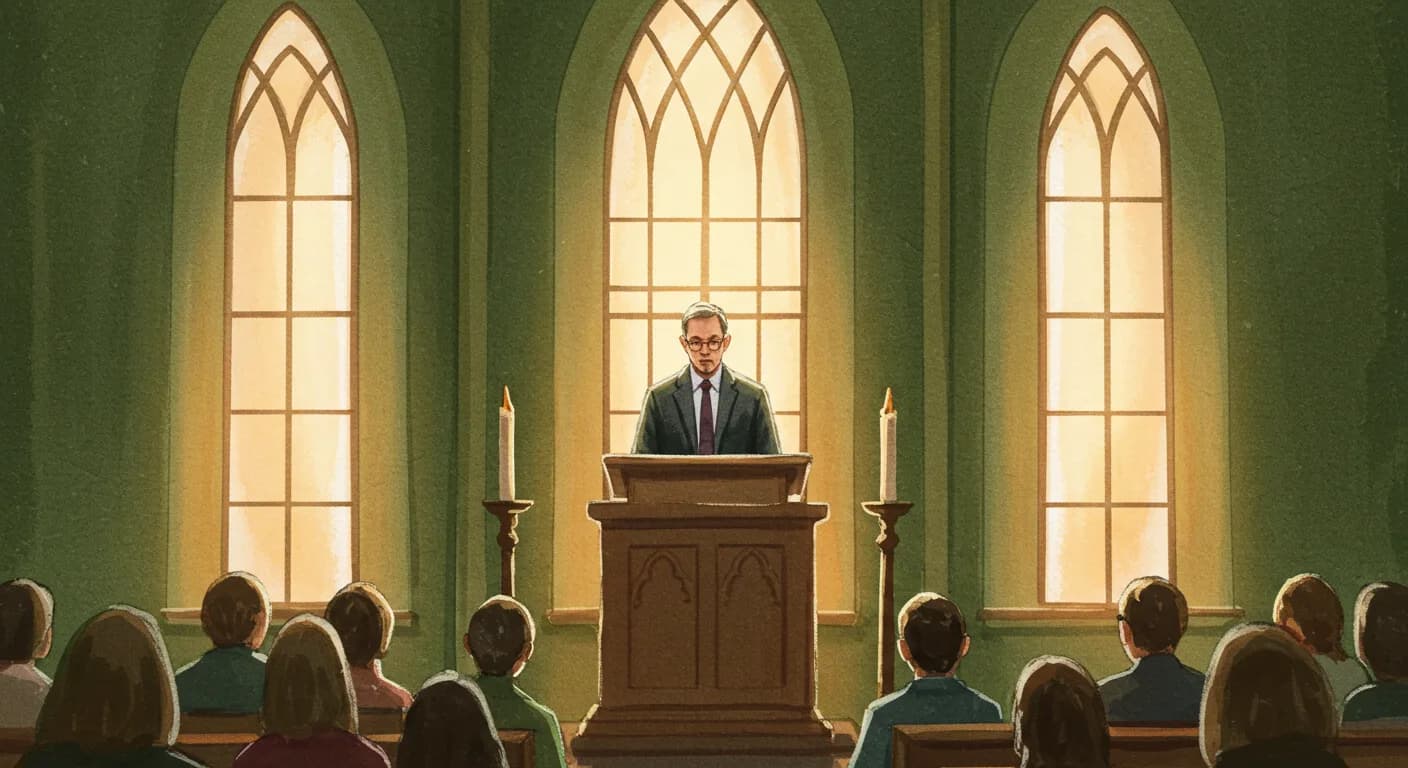
I preached for seventeen years.
Not seventeen years of inspired Sundays. Seventeen years of Sundays when the message landed and Sundays when I could see — right there, from the front of the room — that I had lost them. Not because they were bad listeners. Because I was unclear.
The hardest thing I ever learned in ministry had nothing to do with theology.
It was this: you can have something real to say, and still say it in a way that makes nobody hear it.
The Sermon Nobody Remembered
There's a specific Sunday I think about. I'd spent the whole week on a passage in John — I knew the text, I had the outline, I had a story from my grandfather's farm that I thought connected it all. I got up there and preached for thirty-two minutes.
Afterward, a woman I'd known for eleven years shook my hand at the door. She said, "That was nice."
Nice. That's what you say when you don't remember what it was about.I went home and rewrote the sermon from scratch. This time I started with one sentence: what is the single thing I want someone to walk out of here knowing? One thing. Specific enough to repeat at lunch.
The next week, the same woman found me in the parking lot. She'd told her neighbor. She quoted me back to myself.
Same passage. Same story. Different order.
The Order Is the Problem
Here is what I know now that I wish I'd understood in seminary: the problem is almost never that you don't have anything to say. The problem is that you start saying it before you've earned the right to be heard.
A sermon that begins with your main point is a sermon nobody receives. Because the listener hasn't felt the weight of the question yet. You have to put the problem on the table — name it, let it sit, let them recognize themselves in it — before the answer means anything.
Small business marketing works the same way.
I talk to owners every week who want to lead with their credentials. Years in business. Awards. Services offered. And I understand the instinct — that's what they're proud of, that's what cost them the most.
But the customer didn't show up to hear about you. They showed up because they have a problem. Name the problem first. Then you've earned the right to offer the solution.
What Twenty-Three People Taught Me
One Sunday in a church of about 300, I preached to 23 people. Ice storm. Nobody came. I stood up and preached anyway — for six people in the front two rows, a family of four who'd driven from two towns over, and the rest scattered across the back.
What I noticed: I was clearer that Sunday than I'd been in months.
Because I was looking at 23 actual faces. Not "the congregation." Not a demographic. Twenty-three people with specific circumstances I knew about — the woman going through chemo, the man who'd just lost his job, the teenager who'd shown up three weeks in a row and never talked to anyone.
I wrote the message for them. It was specific.
The businesses I help most are the ones willing to do this. Not "women aged 25 to 55." Twenty-three actual people. What problem does she have? What keeps her from making the call? What would make her lean in?
The ones who try to speak to everyone end up reaching no one. The ones willing to get specific — even uncomfortably specific — get the call.
The Clarity Problem Doesn't Go Away
After I left pastoral ministry, I thought the clarity problem was a church problem. Too many seminarians who'd learned to say beautiful things that meant nothing specific.
Then I started building websites.
Same problem. Different building.
A florist who could make a bride cry with a centerpiece couldn't explain why someone should choose her over the shop on the next block. A restaurant with genuinely great food had a website that looked like a form letter. A contractor who'd been doing this for thirty years had a pitch that started with his license number.
The work was real. The message was muddy.
That's what the Plainspoken Blueprint is. Not a formula I invented. A framework I built from seventeen years of getting it wrong in front of a room of people and then figuring out what made the difference.
The difference is always the same: get specific, name the problem, put the right thing in the right order.
I spent seventeen years learning to do it for a Sunday morning. I do it now in 90 minutes.
---
Ready to get clear? A Blueprint Session starts with your message and ends with something you can use today.